
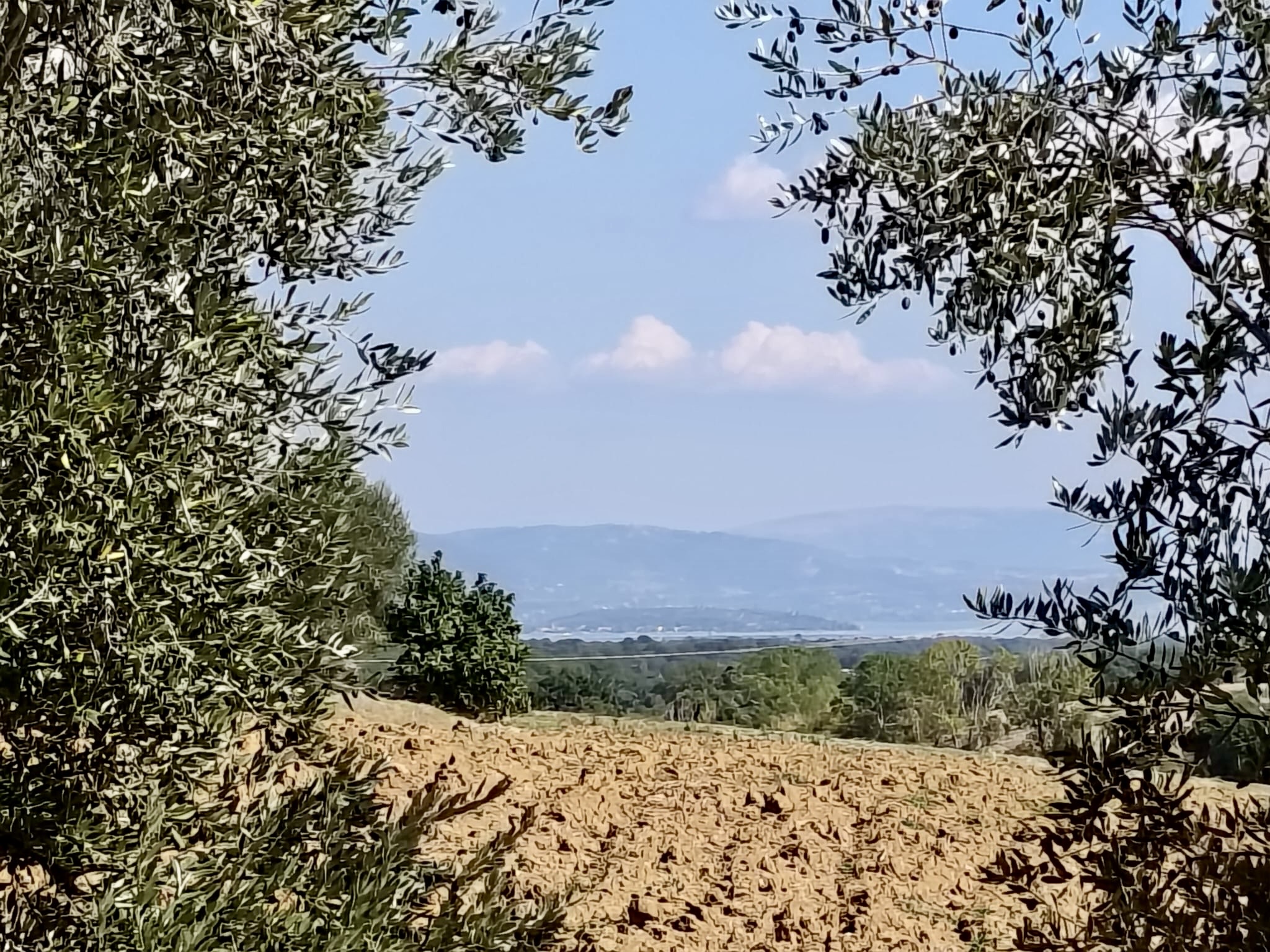
Next Friday, we’re heading to Paciano, Umbria, to begin this year’s olive harvest. We’re bringing a crew of friends, and we’re excited to be back in the grove for the first pick of the season.
The first frantoi are beginning to open now. Paolo’s mill is scheduled to open next week, which means we expect to be among the first producers bringing in olives and pressing this year’s oil. We’ll share photos and updates from the grove as the harvest gets underway.
Why we harvest early
Early harvest is one of the defining choices behind Olio Nuovo. We pick while the olives are still green, before they have reached full maturity. That usually means less oil from each kilo of fruit, but a more vivid profile, with fresh green aromas, bitterness, and pepper.
The chemistry is interesting too. Olive oil’s aroma and phenolic content change as fruit matures, and the results vary by variety and season. Research on harvest timing found higher phenolic content and stability in early picked olives of one studied variety. That doesn’t mean every early oil tastes the same. It means harvest timing is one of the decisions that shapes the oil in your bottle.
That lower yield is part of the tradeoff. Less oil per kilo means more fruit and more work for each bottle. It’s one reason early harvest oil is a smaller, more deliberate production.
What we’re seeing in the grove
This summer was hot and dry in Umbria. In nearby Perugia, the average summer temperature was reported at about 26.5°C, higher than the 2003 average, and the Perugia Sant’Egidio station recorded 21 August days at 35°C or above. Read the local weather report. Paciano has its own conditions, but the regional heat gives a sense of the season the trees have been growing through.
Even with that heat, the fruit in Stijn’s grove looks healthy and in better shape than last year. His test this week came in at a 9 to 10 percent extraction yield. It’s an early reading, not the final result, but it’s encouraging.


Olives grown for eating
These larger green olives are a table olive type, grown to be cured and eaten whole. Before they reach the table, table olives are cured to mellow their natural bitterness. Our harvest focuses on olives for oil: we pick them and bring them to the mill to press the fresh oil we call Olio Nuovo.


There’s a useful regional snapshot in Umbria’s olive bulletin from September 25: monitored olives in the Perugia and Terni areas were around 90 percent of their final size, with the first signs of color change. That’s a regional report, not a reading from every tree in Paciano, but it helps show how close the fruit is to harvest.
From Paciano to Olio Nuovo
Olio Nuovo means new oil. It’s the first oil of the harvest, pressed before it is filtered or rested. The oil is naturally cloudy and full of fresh character. We’ll bring the olives to Paolo’s frantoio and move them through the mill quickly, because time between picking and pressing matters for freshness.
We receive offers of bulk oil all the time. It can be cheaper, but buying anonymous oil and putting our name on it isn’t what we do. We work with growers we know, visit the grove, and take part in the harvest. That connection is what farm to table means to us.
You can meet Stijn, our grower in Paciano and read our July update from the grove.
Follow the harvest
We’ll be sharing what we see as the olives come off the trees and the first oil takes shape. We’re also planning live tastings in the Seattle area. We’ll share the dates and locations soon.
Olio Nuovo has a new look!

The bottle has a fresh new look. It’s still our early-harvest, unfiltered oil from Paciano, pressed at the start of the season for its vivid green character. Discover the 2026 Olio Nuovo.
Our Christmas gift sets are available too, including balsamic vinegar aged for 12 years and 25 years.
The 2026 harvest is coming soon. Current presale savings are close to 17 percent, with an extra 5 percent off orders of six or more. Qualifying orders can save up to 25 percent.
Leave a Reply